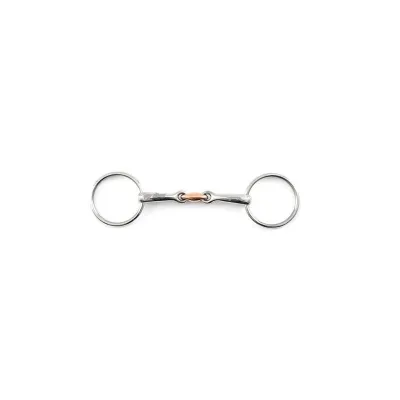
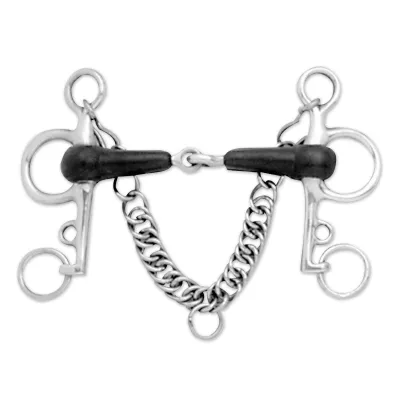
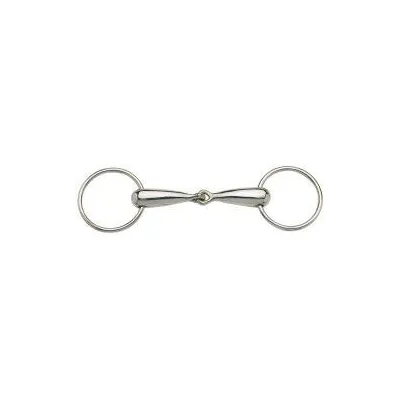
Three-Piece Copper-Centered Pessoa Gem - Comfortable and Acceptance-Enhancing Design
Product Features
Thanks to its double-jointed (three-piece) structure, unlike traditional bits, it does not completely collapse onto the tongue and prevents palate injuries.
The copper alloy in the mouthpiece leaves a sweet taste in the horse's mouth, stimulating saliva production and the horse's willingness to accept the bit.
With its stainless steel rings and durable body, it offers long-lasting and hygienic use.
It distributes pressure on the tongue evenly, allowing the horse to feel more comfortable in its mouth.
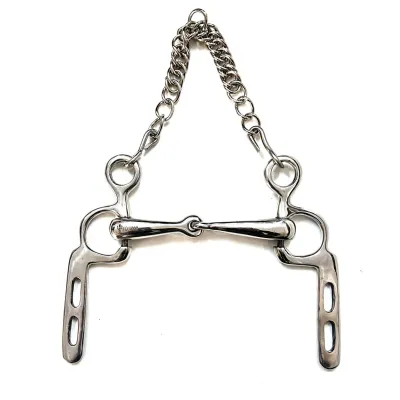
The multi-ring Pessoa structure allows for different levels of leverage and control depending on the ring to which the reins are attached.
Product Description
The Three-Piece Copper-Centered Pessoa Gem is a technical piece of equipment that perfectly balances the horse's mouth comfort with the rider's need for control. The copper link in the center activates the horse's chewing reflex, allowing for a smoother contact with the bit. Its three-piece design eliminates the "nutcracker" effect, reducing pressure on the palate and helping to transmit commands more precisely. The Pessoa ring system offers the rider different degrees of steering and leverage options to suit their needs.
Technical Advantages and Profit
Precise Pressure Distribution: The three-piece joint structure distributes pressure across the tongue and jawline, preventing pain concentrated in a single point.
Natural Copper Effect: The copper in the mouthpiece softens the horse's mouth and reduces the cold effect of the metal, resulting in more willing work.
Flexible Control Levels: Thanks to ring options, the same bridle can be used as both a soft bit and an effective lever bit.
High Material Quality: Copper components combined with wear-resistant stainless steel are among the safest metals for oral health.
Balanced Form: The anatomical design adapts to the horse's mouth structure, reducing resistance.
Areas of Use
Training horses that have difficulty accepting a bridle or have a "dry" mouth (producing little saliva).
Horses with sensitive palates and discomfort from traditional single-break bridles.
Training where the rider wants to change the level of control (leverage) according to need.
Technical riding to ensure the horse works in a more collected form.



 Türkçe
 Azərbaycan dili